
News
Stay up to date on the latest crypto trends with our expert, in-depth coverage.


PEAQ fluctuates 52.9% in 24 hours: Driven by Polkadot 2026 upgrade expectations and surge in trading volume
Bitget Pulse·2026/03/17 22:03
GODS (GodsUnchained) fluctuated 76.2% in 24 hours: Trading volume surged 6390%, triggering a speculative rebound
Bitget Pulse·2026/03/17 22:02
VANRY fluctuates 40.6% in 24 hours: trading volume surges over 1700% driving eventless rebound
Bitget Pulse·2026/03/17 22:02
AIAV (AIAvatar) fluctuated 168.8% in 24 hours: trading volume surged with no clear event driver
Bitget Pulse·2026/03/17 21:54
Crypto Bill Stablecoin Yield Compromise Could Come This Week: Tim Scott
Decrypt·2026/03/17 21:46
POLYX fluctuates 54.0% in 24 hours, surges over 30%: Driven by social buzz and surge in trading volume
Bitget Pulse·2026/03/17 21:35
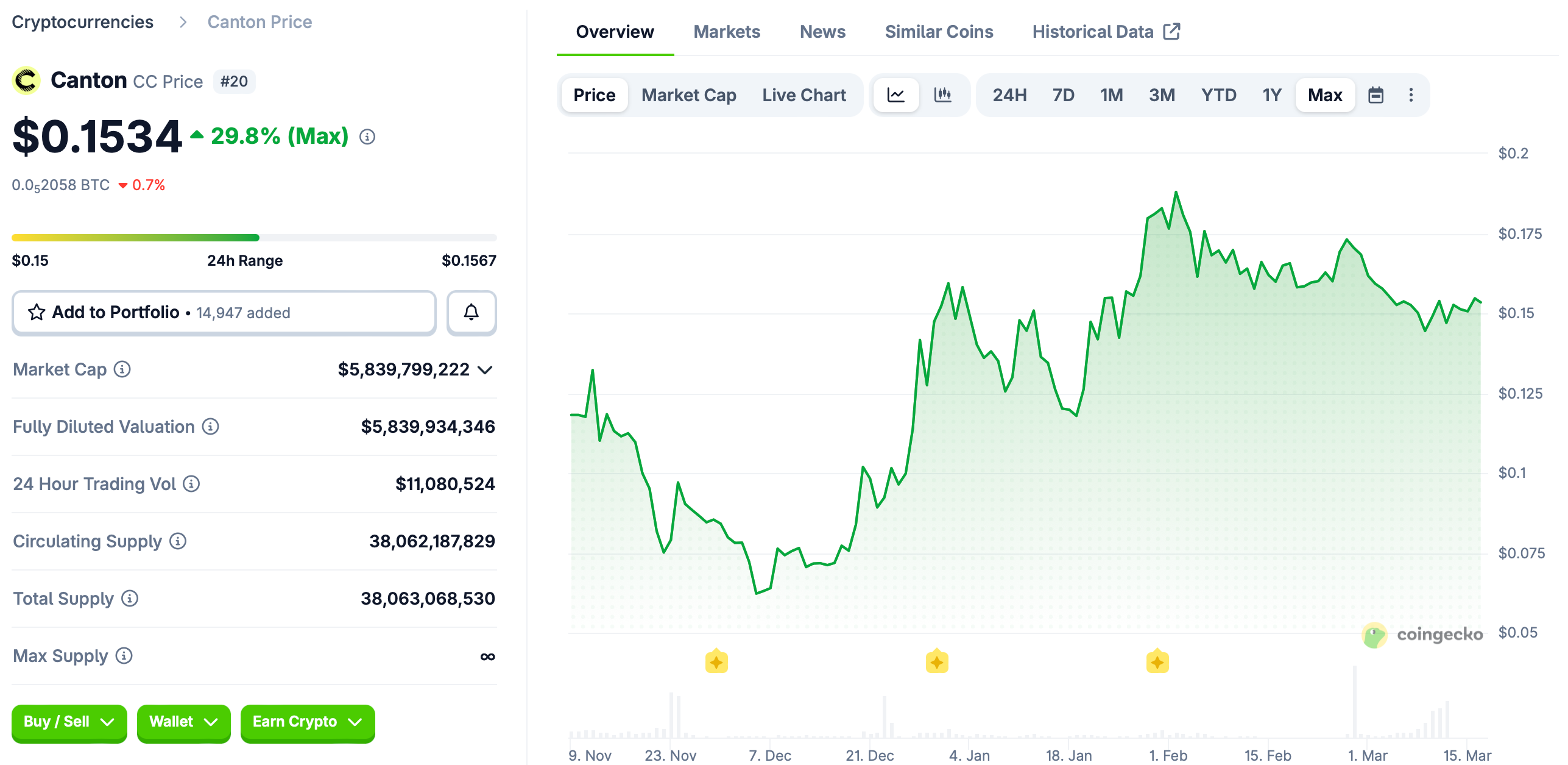
Moody’s brings credit ratings onchain with Canton Network integration
Cointelegraph·2026/03/17 20:42
COLLECT (COLLECT) 24-hour Volatility at 42.8%: Trading Volume Surges Driven by Leverage Trading Signals
Bitget Pulse·2026/03/17 20:36
Morgan Stanley exec says crypto ETF adoption still 'very early' as advisors weigh allocations
The Block·2026/03/17 19:33
Flash
22:43
Spot HYPE ETF trading volume approaches 900 million dollars, early demand indicates institutional interestOdaily reports that about one month after the launch of the first spot HYPE ETFs, early trading data has shown strong performance, indicating institutional investors have demand for Hyperliquid-related exposure. Currently, three issuers offer HYPE investment products through regulated broker channels, including 21Shares’ THYP, Bitwise’s BHYP, and Grayscale’s HYPG. Since their debut, the combined trading volume of these three products has approached $900 million, with net inflows reaching $153 million. However, trading activity among the products is not evenly distributed; BHYP and THYP contributed most of the trading volume, while HYPG, which launched later, is still in the process of ramping up. Unlike some tokens that mainly rely on speculative demand, HYPE’s value logic is more directly linked to Hyperliquid’s trading activity. About 97% of Hyperliquid’s trading fees go into the Assistance Fund and, through an automatic buyback mechanism, create a correlation between trading volume and token demand.
22:22
According to Bloomberg, sources revealed that among the seven tranches of 2- to 30-year bonds issued by Nvidia, the yield on the 30-year corporate bond was priced at a premium of only 0.25 percentage points over the 30-year US Treasury yield.It is worth mentioning that Nvidia did not hold an investor conference call hosted by banking institutions prior to the issuance, as is customary for other issuers.
22:17
Barclays: Geopolitical "adjustments" are fading, spot gold will rebound to $4,900Golden Ten Data reported on June 16 that Barclays believes the gold sell-off triggered by the Middle East conflict is not a reversal, but rather a market reset. The bank pointed out three direct reasons: a significant strengthening of the US dollar, the stock market attracting risk capital away from defensive assets, and excessively concentrated positions accelerating the decline. Barclays estimates that the combined effect of a stronger US dollar and a 10% rise in the S&P 500 index led to a roughly 10% drop in gold prices, with the remaining decline caused by position unwinding. However, the bank also acknowledges that, based on fair value, these forecasts carry some short-term downside risk. Structural factors supporting a long-term bullish trend include persistent inflation, policy uncertainty, and ongoing foreign exchange reserve diversification by central banks. These are considered variables that accumulate their impact slowly and thus did not provide significant support during the acute phase of the crisis. According to the bank’s calculations, the two main conditions for a rebound in gold prices are the reestablishment of a weakening US dollar and the resumption of sustained central bank purchasing.
Trending news
MoreNews